Postpartum Exercise ≠ Going to the Gym Danish Co-Creation Study Suggests that Integrating Daily Activities into Care is Key Parenting Knowledge
Extensive research shows that postpartum physical activity (Physical Activity,PA)has significant benefits for maternal physical and mental health, including the reduction of depression risks, the promotion of psychological well-being, the aid in weight recovery and the positive impact on the development of healthy behaviors in children. In2020,the World Health Organization (WHO) recommended that postpartum women engage themselves in at least150minutes of moderate-intensity activity per week.
The postpartum period, the first year after childbirth, is a complex transitional phase marked by multiple physical, psychological and social role changes for women. It is also considered a crucial"window of opportunity" for promoting healthy behaviors. Although women are more willing to adopt health-beneficial behaviors during this stage, in reality, support for postpartum physical activity is often overlooked due to factors like insufficient knowledge and inadequate preparation among healthcare professionals.
1.Research Design and Data
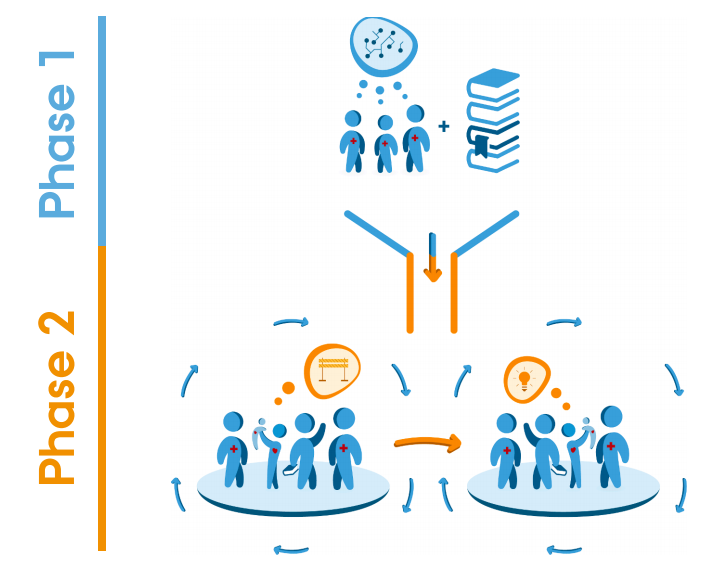
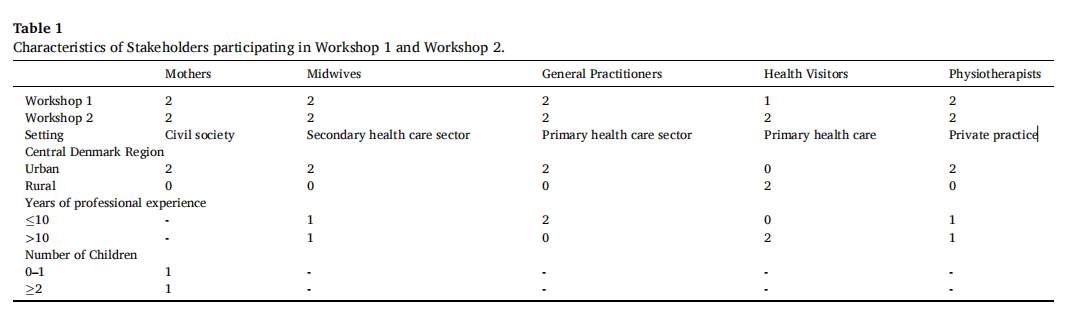
With the adoption of the"PRODUCES+"framework, ”the conduct of this study consists of two phases with the first composed of three expert interviews and a review of existing literature and the second involving two co-creation workshops,whose participants range from postpartum mothers, midwives, general practitioners, health visitors to physiotherapists.
Main Research Question
How can interdisciplinary, multi-stakeholder collaboration be used to co-design feasible, practical postpartum physical activity support strategies that can be integrated into the existing Danish maternity care system?
2.Main Findings
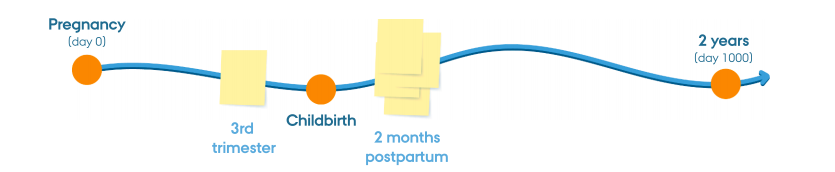
1)The third trimester of pregnancy and the two months postpartum are regarded as critical moments for postpartum physical activity support.
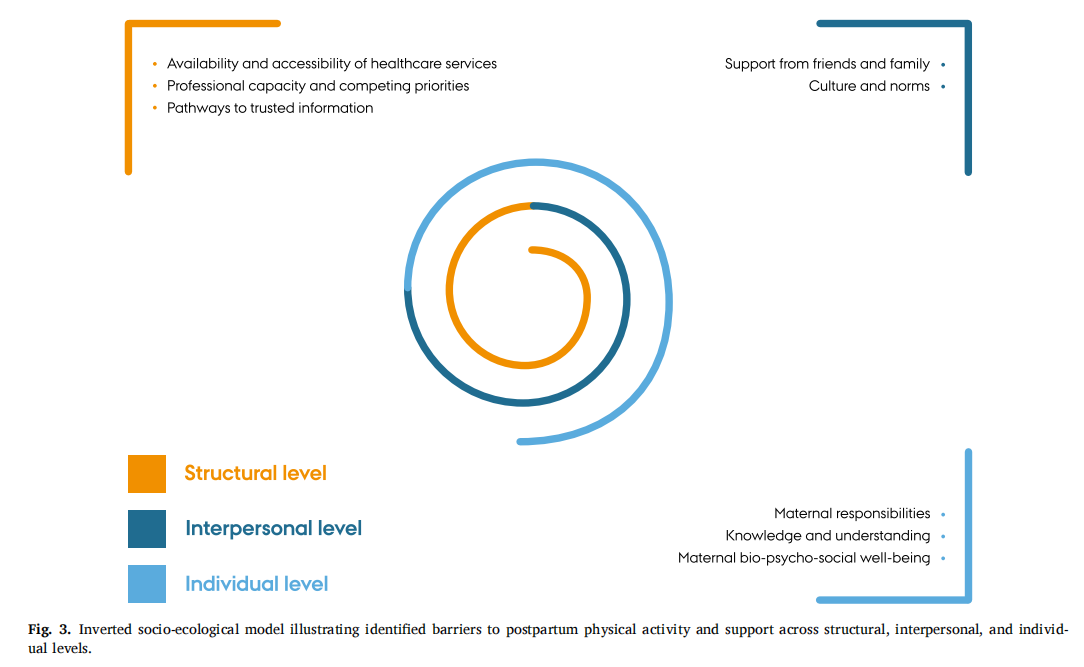
2)Barriers to postpartum physical activity and its support were identified from three aspects:
structurally, there's low accessibility to physiotherapy resources, limited time for professionals and lack of unified guidelines;
inter-personally, societal normative pressures are high while partner support is insufficient;
individually, new mothers have limited energy yet prominent safety concerns regarding postpartum exercise.
3.Main Conclusions:
1)Redefine "exercise" by integrating it into daily life.
Physical activity should be viewed as an enjoyable part of life rather than an extra task. Any movement counts, including walking with the baby, interactive floor play with the child and body weight stretches. The goal is to reduce psychological pressure and increase sustained participation.
2)Clarify the roles of various professionals to provide precise support.
Health Visitors: Utilize home visits to provide the most individualized advice based on the mother's living environment, social support, etc.
Physiotherapists: Provide professional guidance for mothers with specific needs (e.g., C-section recovery, diastasis recti).
General Practitioners//Midwives: Conduct simple screenings and encouragement during routine check-ups, and establish clear referral pathways.
3)Leverage community power and digital tools.
Encourage the introduction of light activities guided by professionals into existing "mom groups," or utilize apps APPto provide flexible and accessible support plans, fostering a supportive atmosphere.
4.Research Limitations
1)Due to the relatively small sampleand the fact that participants were mainly from Central Denmark Region,the perspectives lack general applicability.
2)Individualswith higher willingness to participate were recruited which potentially leads to selection bias.。
3)With equity issues not fully recognized until mid- studyand partially addressed through the use of personas, ,vulnerable groups were underrepresented.。
4)Strategies are based on the specific Danish healthcare system and require localization for adaptation to other systems.。
5.Future Directions
1)Efforts should be made to translate co-created strategies, such as developing national guidelines, into concrete tools and conduct pilot studies.
2)Behavior change theories should be incorporated to enhance intervention effectiveness and address issues systematically.
3)Scientific evaluation and implementation frameworks should be utilized to ensure the scalability and sustainability of relevant strategies.
4)In future research, the recruitment of underrepresented groups should be prioritized to ensure the equity and inclusivity of strategies.
6.Final Insight
1)Clear division of roles among different healthcare professionals ,is needed to form a collaborative support system, preventing mothers from receiving conflicting information or falling into a support vacuum./span>
2)The narrow perception of“exercise as gym workouts”should be broken with emphasis shifted onto the idea that “any daily activity that moves the body including playtime and walking counts.”。
3)Community mom groups should be established with online guidance provided to make it easier for mothers to participate and persist.。





 Official Account
 Rednote
 Weibo
Weibo Instagram
 YouTuBe
 Close
Close


