New Research from Peking Union Medical College: 80% of Mothers Eat Improperly Postpartum while Occupational Factors Are Affecting Their Dining Tables Life Skills
The postpartum period is a unique and critical stage in a woman's life, accompanied by profound physiological and psychological changes, including alterations in endocrine, immune, and metabolic functions. Adequate nutrition during this time is crucial for maternal recovery. Currently, China has the highest female labor force participation rate globally and the world's largest female workforce. Working women face unique health challenges postpartum, as balancing work demands with infant care makes their dietary quality and overall health more vulnerable. Previous research has often focused on nutrient intake rather than overall dietary quality. Although it is recognized that occupational factors, such as working hours, income and social support influence dietary behaviors, systematic research in this area remains limited.

1.Research Design and Data:
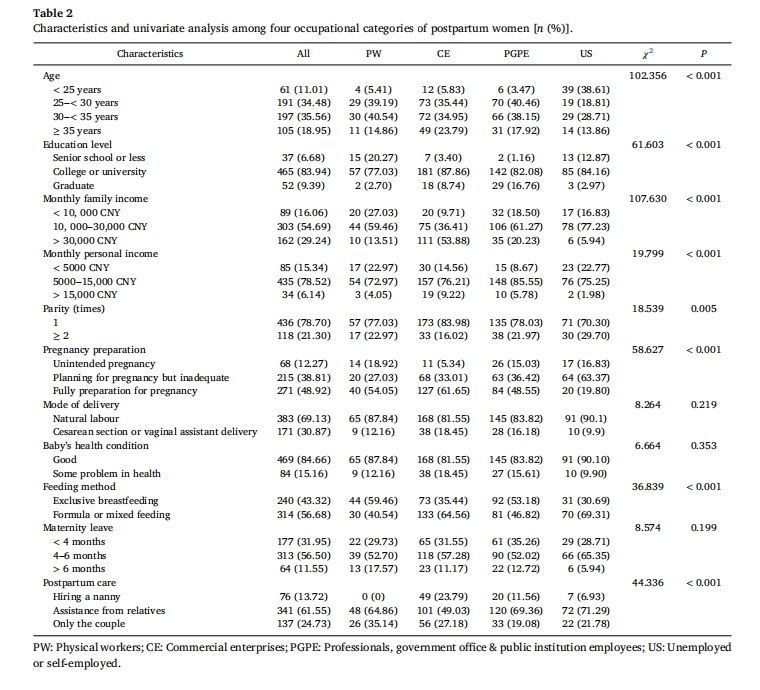
This study recruited 554 postpartum women (one year postpartum) from 10 community health centers with data collected of sociodemographics, occupation and postpartum care via questionnaires. Occupations were classified into four categories based on socioeconomic status.Descriptive statistics were generated using SPSS and ExcelDietary quality was assessed using a modified Postpartum Diet Balance Index(DBI-P)for the sample population.
Main Research Questions:
1.What is the overall dietary quality of postpartum women?
2.Are there differences in dietary quality among women in different occupational groups?
3.Which occupation-related factors (e.g., income, maternity leave, care support) influence dietary quality?
2.Main Findings:
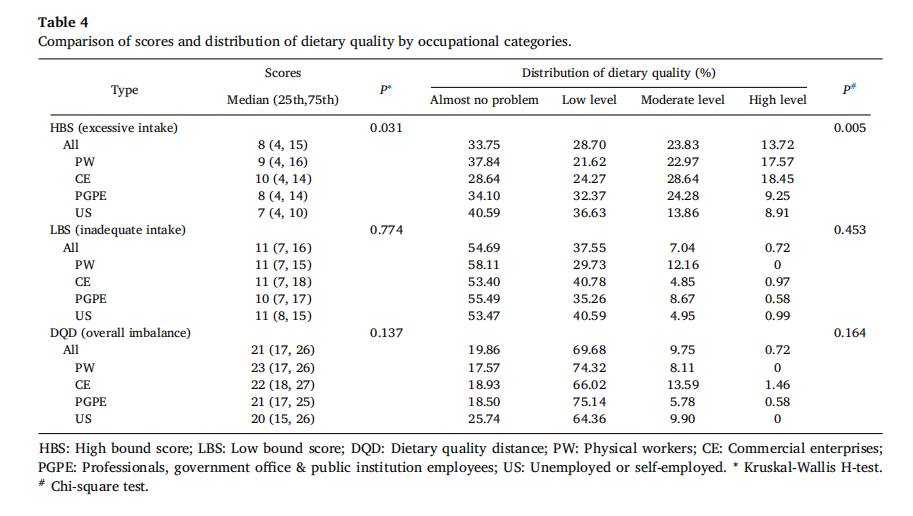
1.Postpartum women face severe dietary imbalances: Specifically, there is excessive intake of grains, eggs, and meat while intake of vegetables, fruits, and dairy products is insufficient. 66.25% exhibited excessive intake,45.31% showed insufficient intake, and only19.86% had a relatively balanced diet.
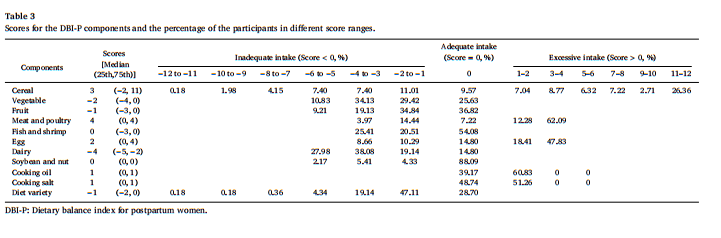
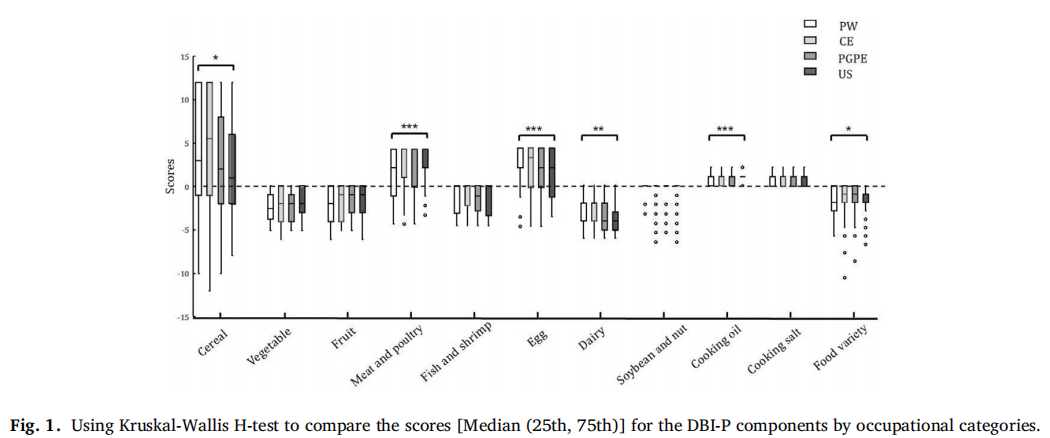
2.Significant occupational differences exist in the dietary quality of postpartum women.Employees in commercial enterprises had the most severe over consumption issues. Unemployed or self-employed individuals had poorer dietary diversity and lower dairy intake. Professionals, government and institutional employees had relatively better dietary quality.
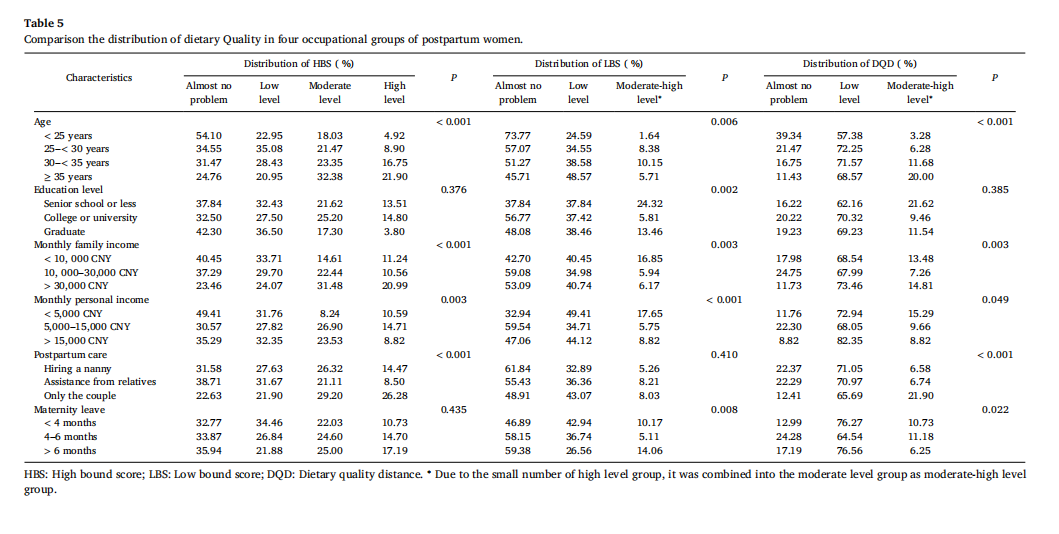
3.Household income, maternity leave duration, and postpartum care support are key factors influencing the dietary quality of working women postpartum higher-income groups are more prone to over consumption, while lower-income groups are more prone to under-consumption. Women with maternity leave shorter than 4 months are at higher risk of dietary insufficiency. Women with family help have more balanced diets.
3.Main Conclusions:
Occupational factors significantly influence the dietary quality of postpartum women.
Household income, maternity leave duration, and postpartum care support are key determinants of dietary quality.
For one thing, multifaceted policy interventions are required to properly address the severe dietary imbalances among postpartum women. For another, differentiated nutritional strategies should be designed for different occupational groups while policies should be implemented to improve the nutritional status of postpartum women.
4.Research Limitations:
1. Due to a relatively small sample size, the results have limited representativeness.
2. Also, the study failed to establish causality between identified risk factors and postpartum dietary quality.
3. And the data is reliant on self-reporting, thus subject to recall bias.
5.Future Research Directions:
Sample size and scope should be expanded enhance generalizability of conclusions.
Longitudinal studies should be conducted to clarify causal relationships between occupational factors and dietary quality.
Also, objective measurements should be incorporated to reduce subjective bias
while an exploration should be carried out of the effectiveness of workplace nutrition interventions.
6.Final Insight:
The nutritional issues of postpartum women are not merely matters of individual behavior but are structural, occupational and social in nature. The study highlights the need for targeted nutritional guidance to prevent both over- and under-consumption. Government, businesses and the whole society should collectively promote the following measures:
1. Paid maternity leave policies should be implemented and extended.
2. Healthy workplace meals and nutrition education should be provided by employers.
3. Community postpartum care and family support services should be strengthened.






 Official Account
 Rednote
 Weibo
Weibo Instagram
 YouTuBe
 Close
Close


